Wednesday, October 31, 2018

Halloween and Worshiping the Devil

Jack-o'-Lantern 2003-10-31.jpg

Today is Halloween. Some people like Halloween, others do not. In my life, I have found that Halloween provides me with a wonderful opportunity to laugh at that which I fear, including my own mortality. As such, it has provided me with some great psychological and even spiritual benefits.

But, as is always the case this time of year, the fundamentalists are out in force, talking about how celebrating Halloween is actually worshiping the devil. But of course, that is not my intent when I celebrate Halloween... "this doesn't matter!" They reply. By celebrating Halloween, I am worshiping the devil, without even meaning to. As evidence for this, they cite the origins of the tradition among other, non Christian religions. But that would also be an accurate assessment of most Christian holidays and high holy days. It is also an accurate assessment of the Jewish holy days found in the Bible, which are borrowed/adapted from older Mesopotamian and Egyptian predecessors. 

A relationship to another religion besides your own does not make something demonic. Turning other religion's gods into your religion's demons is a relatively old parlor trick. For example, Zoroastrianism demonized the Gods of the Vedas... turning their Vedic Gods into Zoroastrian demons, and their Vedic demons into Zoroastrian Angels (See my first of two lectures on Zoroastrianism, time stamp 4342s). In fact, the English word "Demon" is related to the Vedic word Deva... meaning... Divine... which is also etymologically related.

Strange that the English word for Demon has the same origins as the English word Divine... Specifically because of our past history with demonizing other peoples divine beings.

Demonization of the religious beliefs and practices of others is an approach that I strongly dislike. I wrote back in 2009: "worship of God or the Devil must be intentional, some hidden meaning behind symbols can't cause you to somehow accidentally worship the Devil." See my post on "The Language of Symbolism" Part 1, and Part 2. At the time I wrote that, I was a believing Mormon, and my goal was to argue that Mormons are not "accidentally worshiping the devil" because of a pentagram on a building, if the builders of the building didn't think that was what the symbol meant. 

As an Ex Mormon, I still stand by what I wrote back then. And a very similar logic applies to Halloween. 

We cannot believe that it is possible to "accidentally" worship the Devil, without implying that God is an immoral monster, who will judge us based upon some legalistic definition, rather than upon the intent of our hearts. 

If there is a God, then I do not believe that God is an immoral monster.


Photo By Toby Ord - Own work, CC BY-SA 2.5, https://commons.wikimedia.org/w/index.php?curid=271348

Friday, October 26, 2018

Why Study Comparative Religion?


My idea of a good day off is to head to the swimming pool, pull up a reclining chair, and either read the Upanishads (that was my obsession last month), or settle down to read apocryphal stories about Daniel in Persia (which is what I was reading last week).

Ok.. Yes, I’m weird. I understand.

When I was teaching at the University, or writing as an apologist for my Church, my interest in all things religious made sense to everyone. It even made sense to those who didn't share my particular obsession. My goal must have been to “defend the faith,” so no one was surprised by it. Of course, even at the time, that was only a small part of what interested me about the subject.

Since my faith transition, my continued interest in comparative religion seems surprising to everyone.

My secular friends can’t understand why I would care to study things that are all just “made up”. My religious friends wonder if my interest isn’t just cover for some shady motive to discredit their faith. Both sides tend to react to my interest in the topic with either confusion, mild incredulity, shocked disbelief, or sometimes even outright hostility.

So why do I spend so much time and energy studying about and then educating people about the world’s different religions?

That’s a question I take rather seriously, but there is more than one answer to it.

Personal preference

The simplest answer is: “I like it.” Ok, fine, I love it. I love it in the way that a math teacher might love math, or that an art teacher might love art, or that a history teacher might love history. But that argument is somewhat circular. After all, it still doesn’t explain why I love the subject.

There really is no accounting for taste. Some people like chocolate, some like vanilla. But saying that I just like to study religion because of my personal taste is a bit of a cop-out. The truth is that there are reasons I am especially drawn to this subject. I am a person who enjoys puzzles. And there are quite a few fascinating puzzles buried in this field. But the puzzles of religious history are not like the Rubik's cube that fascinated me for hours as a child, because the answers to these particular puzzles matter in the real world.

The Influence of Religion


Religion motivates the ascetic to live alone, and motivates the saint to charity. Religion builds nations, and moves armies. Religion drives our most intractable conflicts, and religion motivates people to seek peace.

The Israeli-Palestinian conflict is impossible to comprehend without at least some degree of religious literacy, and the nuclear armed standoff between Pakistan and India is explicitly religious. The civil rights movement in America was religiously motivated, as was the fight for independence in India. Gandhi's opposition to the oppression of the untouchables, and those who opposed him, were both motivated by religion. And throughout the world, the fight for equality for homosexuals finds itself opposed on nearly every side by religious traditions of one sort or another.

The American political landscape where the so called “religious right” wields incredible power and influence is even less comprehensible without understanding the influence of religion. The Bible is evoked both by those in power to justify their actions, and by those who view themselves as the resistance.

According to polls, nearly 4 in 10 adults in America believe that humans have existed in our present form since the beginning of time, an extreme form of creationism. This stubborn resistance to the truth can’t be understood without a rather sophisticated understanding of the Bible and Paul’s analogy between Christ and Adam found in Romans 5.

Claims that America is secularizing seem to be premature. In reality, liberal Mainline Protestant Churches are on the decline, while religious fundamentalism is as strong as ever. This is yet another form of the intense social and political polarization that is plaguing American life.

 
Source: The Persistent and Exceptional Intensity ofAmerican Religion: A Response to Recent Research.
For better or worse, we cannot understand the world in which we live without understanding religion. This is true of our past, is true of our present, and it appears that it will remain true for the foreseeable future. But as important as religious literacy is for understanding our geopolitical world, I believe that it is not the most compelling reason why one might be interested in religion.

The Human Condition

The religions of the world are far more than a collection of myths and dogmas, made up or otherwise. A religion is a complex combination of stories, texts, philosophies, practices, rituals, communities, and hierarchies, all bound up in an entire world view. Religions provide those who follow them with a way of contextualizing and perceiving the world around them.

Most people’s religious journeys begin with discontent. They start by realizing that there is something that is deeply and disturbingly wrong with the world. It is from this starting place that the world’s religions diverge, each to their own unique diagnoses of the problem, and then to their unique proscription for the solution.

Is the problem suffering? Buddhism provides an answer. Is it sin? Christianity had the cure. Is the problem wandering and exile? Judaism tells the story. Are we lost because we forgot our true place and calling? Yoruba can help you remember. Or is the problem chaos and death? The religion of ancient Egypt proposed a solution to that. Or perhaps the problem is pride? Islam can teach you how to submit. Or is the problem the illusion of separateness? Hinduism can show you how you are connected, and that all things are one. Is the problem found in the lack of social order and convention? Confucius will teach you how to become a sage. Or is the problem found in constraining social orders and convention? Taoism will set you free. Or is the problem the presence of religion itself? Atheism will purge you of your “silly” superstitions.

Or… perhaps, is the problem composed of all these things together? At least we know that something is wrong.

But is the solution faith in Christ? Or is it Buddhism’s noble eightfold path? Or is it Islamic submission to the one undivided God? Or is it perhaps ritual and ethical purity? Or is it return and reconciliation? Or is it obedience to law? Or is it rejection of law? Or is it the rejection of religious superstition? Is it the training of Confucian culture? Or is it the rejection of Culture for the natural way of the Tao? Or is it the realization born in meditation, that you are one with all that is?

Religious traditions evolved in order to address the problem of the human condition in a compelling manner. Those religions that proposed solutions that were not compelling did not survive. Therefore, each proposed problem and solution provides a useful window into the human condition. Because the human condition is something we all share, we should not be surprised to find similar concepts repeated across the world’s religions from wildly different times and places. These similarities tell us important things about what all humans share. But the world’s religions are not all the same, and their very real differences and conflicts are illustrative of the conflicts within our own natures.

For example. Because we evolved as tribal entities, most humans have an innate desire to find and follow a powerful yet worthy leader who will save us from our enemies, our troubles, or from ourselves. Even the most anarchist among us can sometimes feel this desire pulling at us. It’s what makes great movie scenes like the coronation of Aragorn at the end of the Lord of the Rings so moving. And it’s one reason why movies like The Return of the Jedi, and The Matrix are so compelling. This is what the world’s monotheistic religions claim to offer, a deity that is both powerful, but also good and worthy of our respect, worship, and emulation.

But those same tribal origins have also gifted us with the conflicting desire for autonomy, individuality, and freedom. Speaking to this impulse is the genius of religions such as Taoism. And it is also why we feel so betrayed when we come to see serious signs of immorality in the way the religious texts of Monotheism choose to portray the supposedly all good and all powerful God. These are both inherent elements of human nature. And they are in fundamental conflict.

There is actual relief and release in letting go of our thoughts, preoccupations, frustrations, and lust for the material things we normally chase. Buddhism offers practical techniques for doing just that. Most people can instinctively feel the attraction of that sort of peace.

Similarly, we all want to be part of something larger than ourselves. This desire is perhaps taken to its most extreme in the traditions of the Islamic Sufis and the philosophical Hinduism of the Upanishads. There, we are told that the separate self is an illusion. In truth, the self is already eternal, immortal, and one with all things. God is thus the unity of all creation. And we are that unity. You are this. But you are also that. You are all things. And the unity of all things is God. Thus, we discover that We. Are. God. And the experience of this unity is the ultimate release from rebirth and samsara, enlightenment itself.

I still can’t tell if that is the ultimate expression of humility, or of pride. But I can see why the idea is so very compelling. And when something like this is experienced in meditation, the idea becomes even more compelling.

We are all sinful, and righteous, prideful, and humble, autocratic and anarchist, suffering, and free, isolated, and interconnected. To come to know the world's religions is an exercise in knowing ourselves. 

Cure for Fundamentalism

I have often wished that world religions and religious history were offered in our public schools. The separation of church and state is often cited as the reason why this is impossible, although I do not think that this is actually an insurmountable obstacle. After all, religious history is… well… history.

Either way, I wish we could give our children the window into human nature that the world's religions can offer.

But there is at least one more essential lesson we can learn from the world's religions. Most people approach the study of religion as an excuse to figure out why their own religion is superior to everyone else's. We don't study other people's beliefs in order to see what they can teach us, but in order to figure out why they are all wrong, and by extension, why we alone are right. Of course this is the apologist’s approach to religious studies. And it was therefore my approach for years.

But it is ultimately unsustainable.

Eventually, if we study religious history long enough, we come to see the evolutionary origins of our own beliefs in the parallels they share with the traditions that came before. And once that truth is seen, it cannot be unseen. That does not mean that your tradition, whatever it is, does not have a valid and even useful diagnosis of the human problem. Nor does it mean that it does not have a useful prescription for the solution to that problem. It does not even mean that there can be no God, or that your tradition does not bear a measure of inspiration. But what it does mean, is that there is no one religion that has a monopoly on the truth. The one true religion does not exist.

No one religion is true. They are all false. And yet, they are also all true.

If, like me, you believe that the world's religious conflicts are born less from the irrationality of religious “superstitions”, and more from the dogmatic and fundamentalist way in which some religious practitioners tend to approach those beliefs, then a knowledge of religious history is ultimately the cure.

Given all the hundreds of religious traditions that flourish today, and the thousands that have existed in recorded history, and the millions that have vanished without leaving a textual record, each evolved from the ones that came before them, it would be arrogant to assume that the single tradition we have embraced has the single perfect answer to the human problem, leaving us with nothing to learn from any other tradition.

There are many possible ways out of the trap of fundamentalism, but I believe that religious literacy is the best. Down this path, one does not simply trade one form of dogmatism for another, but dogmatism is traded for humility and an openness to being taught. When this works, we are no longer just open to being taught from our own tradition, but from them all. We are also more willing to admit the flaws in our own tradition.

We can trade our dogmatic pride, for teachable humility.

Is there any wonder that I find great value in knowing and studying the world's religious traditions? And is there any wonder that I find value in teaching these things to others?

Tuesday, August 28, 2018

Something New

Something New
I haven’t made much use of my blog in many years. I have only posted 2 things since 2014. Where have I been? Well…

Beginning at an Ending


My shelf finally broke in 2009.

In Mormon circles the mental “shelf” is a common analogy. Mormons are encouraged to put intellectual questions that challenge their faith on their “intellectual shelf”. The idea is that we can't know everything now, so we should expect a few unanswered questions, which is an eminently reasonable position. But we are also told to not let those unanswered questions challenge our faith. Instead, we should put them up on a shelf. At least for now. Then perhaps one day we can take them down and there will be answers. In the meantime, we can have faith.

This seems to work very well until our shelves grow so heavy that they eventually break. This can happen suddenly, spilling an entire lifetime of problems and impossibilities onto our unprepared laps. The result is often traumatic.

It was traumatic for me. It felt like pieces of my life, of my identity, of my core self, had been ripped away, leaving large holes that seemed impossible to ever fill.

Worse, I was one semester away from graduation at BYU. At the time, I was paying my way through graduate school by teaching courses in the Ancient Scripture department. My goal was to eventually teach religious studies at BYU full time. That was now obviously impossible. I couldn't bring myself to pretend to believe something that I do not.

I finished that last course, and did not teach religion at BYU again. The next semester I graduated from BYU, thankfully without needing to go through another of the annual “worthiness” interviews which spared me from being forced to choose between my integrity and receiving the degree I had worked for so many years to achieve.


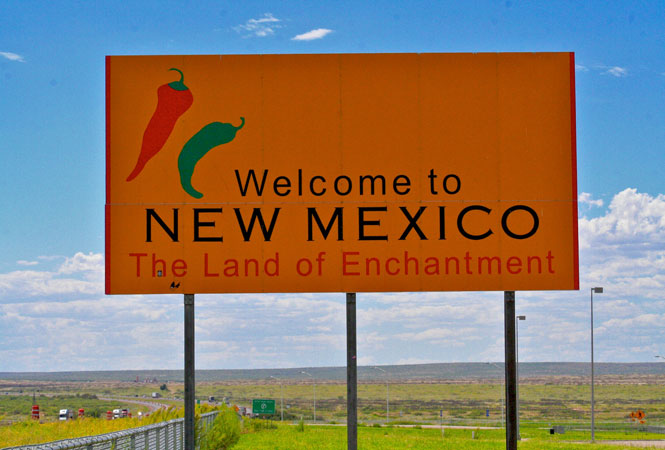
I left Utah, and took a job near my wife’s family in New Mexico, and gave up on my hopes to teach religion at BYU one day. But this left another major hole in my life, because one of my central interests (religious studies) had no obvious outlet.

Despite my lack of belief, I continued to attend the local LDS church, where I taught Gospel Doctrine for several years, and was eventually made the Sunday School President. I informed my bishop at the time of my doubts, but he felt that God wanted me to serve anyway, so long as I could represent the Church when I taught, and not my own opinions. I hope that I did this well.

In 2012 I admitted to my wife that I no longer believed in the LDS church. This was a huge step, since it was something I could barely admit to myself. In January of 2013 I asked to be released from my calling as Sunday school president, and I had quit attending regularly. But this left me with another major hole in my life where the powerfully connected community of my Mormon congregation used to be.

The more involved you are with a given tradition, the more difficult it is to discover that it is not what it claims to be. I was all in, and so my loss of faith nearly destroyed me.

When I started this blog, the idea was that I would use it to share my thoughts about scriptural interpretation and ancient studies. But those thoughts were mostly directed at Mormon apologetics. With a broken shelf, what could I write? I have little desire to trade my Mormon apologetics for attacks on Mormonism.

So for the next few years this blog sat… mostly unused.  

Reconstruction:


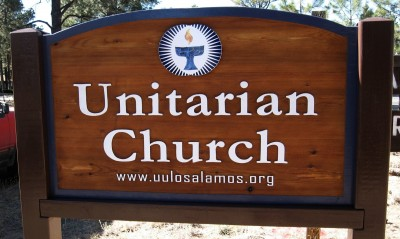
Sometime near the middle or end of 2013 I visited the Unitarian Universalist (UU) congregation that meets across the street from the Mormon church I used to attend. The UU service contains these lines: "As Unitarian Universalists, we affirm the inherent worth and dignity of all people. Whoever you are, wherever you are on your life's journey, you are welcome here." The first time I heard those words I cried.


On December 19th, 2013, marriage equality finally came to New Mexico. The daughter of a member of our UU congregation is gay. She was married shortly after. The next Sunday, we all sat in the service, and they read from the Book of Joys and Sorrows". When our pastor read that she had finally been married to her long time partner that week...every person in the congregation stood up and cheered! We cheered! We clapped! We celebrated!


And I wept.


I felt what most Mormons call the feelings of the spirit more strongly in that moment than I had ever felt it in any Mormon context, and I knew that I had finally come home to a place where I was welcome, and where I could truly welcome others as they are.


I quickly found my new home and community here, and the holes left by my crashing shelf were filled.


Shortly thereafter I joined a Buddhist philosophy and meditation group that meets at the UU church. Buddhism has had a profound impact on my life for the better. These days, my wife claims that I am a more patient and a more loving person. I hope that she is correct.


In 2014 the UU church allowed me to begin teaching a comparative religions class as part of their adult religious education offerings, and they allowed me to design my own curriculum. At first, I borrowed heavily from the comparative religion class I had team taught with Stephen Ricks at BYU titled “Temples and Texts”. But the class quickly grew in scope far beyond this initial seed.


At first I recorded the audio from the classes for my own use in preparing better lectures on each subject. But soon, people began requesting the recordings for classes that they missed, or so that they could “attend” even though they didn't live nearby. So I began to share the recordings of my classes on YouTube.


In 2018 I began teaching a second class at the Church titled “Biblical Scholarship and Literacy”.


It feels as if the last major hole left by my crashing shelf is finally filled.

The Future of Amateur Scriptorians

These days I have no desire to write a blog about Mormonism. But I do want to write again.


I wish I could find a way to talk to people about why I love my new Church so much without constantly contrasting it with the LDS Church. But I'm not sure I know how to do that yet. Everything I see is still in contrast with my past. And the contrasts are large. Similarly, I still process the interesting things I discover about temples, texts, traditions, and religions in contrast to what I once believed. And Mormonism is an incredibly interesting topic of study from the perspective of anthropology and religious studies.


So while I have no desire to write primarily about Mormonism, I am sure that the topic will come up.


But if you are LDS, I would hope that you could stay. I will not be constantly attacking your church and your faith here. That is not what I want to write about. Part of the beauty of being a Universalist is that I don't feel like I need to convert my Mormon friends in order to save their souls. I think they can be “saved” where they are. If they are doing well where they are, then I don't need to convince them to believe exactly like me.


I want to write about the things I have been learning and teaching. I find great value in studying and understanding the world's many religious traditions. I believe that the story of where they came from is one of the most fascinating stories ever told. I am now free to explore that story, without any preconceived notions about what the conclusions must be. Richard Feynman supposedly said that “I would rather have questions that can’t be answered, than answers that can’t be questioned.” It has been a fascinating journey so far. And there is a lot more ground that we can cover.


Whoever you are, wherever you are on your life's journey, you are welcome here. I hope you will come exploring with me.

----

[1] When I initially left Mormonism, there was some motivation for me to try and explain my reasons for leaving, particularly because of the many false assumptions and mischaracterizations of the motivations of those who leave that are so common. At the time I began writing down some of my reasons. It quickly turned into a long catalog of all the things that were on my shelf. And after only getting about a quarter of the way through, it hit 60 pages! If anyone is interested in the reasons my shelf broke, they can read it, in its largely incomplete and unfinished state. But discussing reasons why I do not believe in the LDS Church will not be my focus in this blog.  

[2] This amazing quote is commonly attributed to Richard Feynman, but no firm source is currently known. Richard is known to have made very similar (if somewhat less pithy)  statements. For example: “You see, one thing is, I can live with doubt, and uncertainty, and not knowing. I think it’s much more interesting to live, not knowing, than to have answers which might be wrong.” https://www.youtube.com/watch?v=_MmpUWEW6Is

[3] Some future blog topics I have planned include:
* “Why Study Comparative Religion”
* “The Origins of Monotheism”
* “Mormonism is Where it’s At!” (a discussion of the unique contributions that a study of Mormonism can have in Comparative Religious Studies)
* “The Evolution of God, What the Theory of Evolution Says About the Potential Existence and Nature of God”
* “The End of Religious Anxiety”
* “Meaning and the Broken Myth”
* A series of posts on religion and homosexuality
* “The Philosophy of the Self”
* “Lucifer and Isaiah”
* “Cosmology and Genesis 1”
* “Biblical Inerrancy and Sufficiency”
* “Agency and Free Will”
* ...and there will be many more...


Monday, June 22, 2015

Melchizedek's Priesthood in its Historical Context


Genesis 14 is one of the most fascinating chapters in the entire Bible. Ironically, it simultaneously provides both the best evidence for the historicity of Biblical figures such as Abraham, and for the fallibility of the later Biblical authors who failed to properly understand the historical background of the text.

Genesis 14 has a remarkably different theme and perspective on Abraham's life that is shown in other chapters. Here, Abraham seems less like a peaceful patriarch, and more like an important tribal warlord. The text also contains the primary reference to the figure of Melchizedek, who would become a favorite figure for the wildest of speculations from later religious leaders and authors.

The text shows no evidence of having been written by any of the more familiar Biblical sources, J, E, or P. Textually, it is filled with unique vocabulary and grammatical structures. Grammatically, the text itself hints at having been translated from an older Akkadian source, especially in verses 1, 7, 14, and 23. And there are other reasons to suppose that the text is the work of a non-Israelite outsider, (just as one example among many, Abraham is referred to as "Abram the Hebrew", a term most often applied to the family by outsiders).

The text also seems to hint of an authentic historical setting. For example, the cities mentioned all are authentic names from the correct time period and setting, not the sort of names that later authors would have realistically been able to invent.

None of this evidence by itself is terribly convincing, however, when taken as a whole, the evidence points to some startling implications for the historicity of Abraham himself. What we may have before us in Genesis 14, could be the next best thing to finding an independent external and contemporary Akkadian reference to the person of Abraham in the writings of Israel's neighbors!

Perhaps ironically enough, a historically contextual view of Genesis 14 also clearly demonstrate the fallibility of the later Biblical authors, who badly misinterpret this passage, especially as it relates to Melchizedek.

Melchizedek is presented in the text as an important Canaanite king/priest, the  ruler of the Salem city state, presumably Jeru-salem (literally, the city of Salem) before the Israelite conquest. In that context, it would make sense for Abraham, as a tribal war lord, waging a military campaign in Melchizedek's general territory, to assure Melchizedek that Abraham was not setting himself up as a military rival. To that end, Abraham appears to have shared a covenant meal with Melchizedek, and paid homage to Melchizedek as his political superior, giving him a tenth of the spoils of the conflict waged in Melchizedek's territory. As we would expect from a Canaanite city state king, Melchizedek invokes an authentic Canaanite deity in this exchange (El Elyon) that is well attested in both Ugaritic and Phoenician sources.

Later Biblical authors falsely assume that Abraham would not pay "tithes" to a pagan, and they therefore assume that El Elyon must be another name for Jehovah (this despite the obvious impossibility of turning the king of a Canaanite city state into a worshiper of Jehovah). This same argument is used by the late author of the New Testament book of Hebrews, who argues that Abraham would not be paying tithes to Melchizedek, unless Melchizedek held a priesthood that was both higher, and more ancient than the one that Abraham's descendant Aaron held. This is the foundation of the Book of Hebrew's argument for the existence of a non-Aaronic priesthood that Christ held, that allowed him to function as a "better High Priest" despite his not being a descendant of Aaron. Instead, Christ was thought of as a priest "after the order of Melchizedek." This "better" High priest was able to perform the functions of the Day of Atonement in a better (heavenly) temple, and thereby cleans the world of sin permanently, instead of having to repeat the ritual annually as the High Priests of Aaron had to. Unfortunately for the author of Hebrews, (and for those who cling to Biblical inerrancy) the entire argument is based upon a rather serious and fundamental misunderstanding of the text of Genesis 14!

This sort of misinterpretation of Genesis 14 is not just found in the Biblical authors. It is present in the writings of later religious figures as well. As just one example, the Mormon prophet Joseph Smith Jr. includes a lengthy discourse on Melchizedek in his Book of Mormon (see Alma 13) that is based upon the same central misunderstanding of the nature of the meeting between Melchizedek and Abraham. That mistake is also found in the Joseph Smith's Translation of Genesis 14, and in Joseph's revelation on the priesthood which states that one order of the priesthood was called the Melchizedek priesthood "because Melchizedek was such a great high priest. Before his day it was called the Holy Priesthood, after the Order of the Son of God. But out of respect or reverence to the name of the Supreme Being, to avoid the too frequent repetition of his name, they, the church, in ancient days, called that priesthood after Melchizedek, or the Melchizedek Priesthood" (D&C 107:2-4). This view does not make sense, once one realizes that Melchizedek was a Canaanite king/priest, and not a worshiper of the Israelite god Jehovah at all.

Further reading:


E. A. Speiser, "Genesis: Introduction, Translation, and Notes (The Anchor Bible, Vol. 1)"


Update: 


YouTube lecture on this subject given at the UU Church of Los Alamos, January 20, 2019


Wednesday, April 23, 2014

The Religious Search For Truth

I believe that it's important to do our very best to know what will happen to us after this life (if anything happens to us). If we go somewhere, it would seem to be of paramount importance to know where that somewhere will be because eternity is a loooooong time. On the other hand, since there are many contradictory opinions about this subject, I find great solace and comfort in what the Buddha allegedly taught about this subject. He said:

"If there is a world after death, if there is the fruit of actions rightly & wrongly done, then this is the basis by which, with the break-up of the body, after death, I will reappear in a good destination, the heavenly world.’ This is the first assurance [a man who follows the teachings] acquires.

"But if there is no world after death, if there is no fruit of actions rightly & wrongly done, then here in the present life I look after myself with ease — free from hostility, free from ill will, free from trouble.’ This is the second assurance [a man who follows the teachings] acquires." (Kalama Sutta, AN 3.65)

Thus, I have some certainty that if there is another world after this one, I will be blessed, because I do my very best to live a good and a compassionate life here, and because I search for the truth to my very best of my ability. If there is a God that is worthy of my worship, He or She will reward my efforts. If there is no life after this one then my efforts, and my search, are of value in and of themselves, because they help me to live a better life here and now, and because they bring me joy in the search, here and now.

Either way, the path, the journey, and the search are well worth the effort.

Thursday, March 6, 2014

Bureaucratic Dogma vs. the Spirit of God.

After reading the recent NY Times article about women's roles in the LDS Church, I was reminded of this experience, and I felt that I should share it.

When I was called as the Sunday School President in my LDS ward a few years ago, the Bishop asked me to pray about my councilors, and then give the names of those people who God brought to my mind to him. I followed this direction, and prayed about who God wanted to be my counselors. One name repeatedly came to mind. This person used to be a seminary teacher, and they had a very very different approach to teaching the Gospel than I did, and they were very opinionated and outspoken about how the gospel should be taught, and wasn't afraid to share their opinions. And their opinions often differed form my own. My approach was very intellectual, while theirs was very emotional. I was sure that their influence would provide a valuable contrast to my thinking. They had been in the ward for many years, while I was new, so they could give valuable advice when it came to choosing new teachers for various classes. They would know the abilities of the people, as well as the needs of the students in a way that I could not. They were absolutely perfect.

The only problem? The person that the Lord brought to my mind was a woman.

Of course, I knew that the answer would be no, but I had to present the name anyway, because she was the one I felt like the Lord really wanted doing the job. Predictably, the Bishop wouldn't let me. But I told my Bishop that the Spirit had called her, and that she was the one the Lord wanted.

There is no real priesthood required to lead the Sunday School, any more than there is to lead the relief society, or the young women. But it didn't matter. Traditionally, Sunday School presidencies were male. And that was that.

Furthermore, mixed gender presidencies are not allowed in the LDS Church. Apparently they trusted me to run the Sunday School, but they didn't trust me to not end up sleeping with a woman if she was in a presidency with me, even if the woman God wanted was old enough to be my mother.

Again, this was all as I expected, and when the name was rejected, I immediately handed in my runner up, acceptably male, name. And the presidency worked relatively well I think, we accomplished many things, and made the ward a better place. But I often wondered how much more good we might have been able to accomplish if the will of God had actually been carried out.

I often remember and think about this moment. It seems important somehow. That moment when bureaucratic dogma took precedence over revelation and The Spirit of God.

Friday, October 19, 2012

BSA Ban on Homosexuality is Antithetical to LDS Doctrine


The Boy Scouts of America's policy with regard to homosexuals is spelled out as follows: “While the BSA does not proactively inquire about the sexual orientation of employees, volunteers, or members, we do not grant membership to individuals who are open or avowed homosexuals.” (see http://blog.scoutingmagazine.org/2012/06/07/boy-scouts-of-america-clarifies-its-membership-policy/)

Here are two good doctrinal reasons why members of the LDS Church should believe that the Scout's policy with regard to homosexuality is wrong:

1. According to the teachings of Jesus Christ, we are to "eat" and "associate" with sinners. Therefore it is wrong to exclude people from the BSA (the young men's activity arm of the Church) for homosexuality, even if it is a sin (which it need not be, see point 2).
2. According to LDS doctrine, open admission of homosexuality (in the sense of being attracted to the same gender, much as heterosexuality means being attracted to the opposite gender), without action upon those tendencies, is not a sin (as taught by Elder Oaks). Therefore it is wrong for the BSA to exclude people for this non-sinful action in and of itself (as they currently do).

While I support their right, as a private organization, to set their own rules of association and membership, I also support my right to complain about their rules when those rules are immoral, or otherwise dangerous or damaging. As they are in this case.